22 June 2010

Voices and Soul


22 June 2010

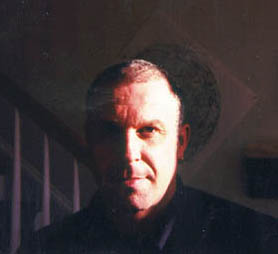
by Justice Putnam
Black Kos, Tuesday's Chile Poetry Editor


With Father's Day just past, I want to pay homage to fathers old, current and new; I want to pay homage to the fathers who are there every day and the fathers who can't be.

I asked my dad, in a more maudlin time just after the birth of my own son almost thirty-three years ago, how I could be a better son?

"By being a good father," he said simply.

When my grandson was four, I wrote the following that has been published a few times in the intervening years. A simple suggestion from a father to a son. Because a father will always wonder if he's done enough; he will always wonder if his mark was for good or ill; and if he is truly the contemplative sort, he will also wonder if there is ever a balance...


On Poetry and Fathers

by

Justice Putnam


The one thing
That always amazed me

Even from the
Earliest moment
Of your life

Was the utter trust
You had in me

And I was struck
At the time
By the amount
Of doubt

I had in myself.

Even though
Your mother and I
Had half a year
To practice breathing

I doubted that
I could remember
Properly when to
Encourage the right
Breath

And when the doctor
Said I could assist
And I finally held
You

Gray and small

I thought to that
Distant day
When you would

Hold your own son
In the same way

And I thought of
The resolve you would
Have

Just as I had

To love
Like no other
Father has loved.

So the years pass

And I doubt
You felt the
Prayer of love

Over that distance
And separation
You grew in.

A correspondence
Is a poor substitute
For a kiss

Yet each word
Was a universe
Of touch

I doubt it
Was enough.

I cannot now
Apologize

For all that you
Went through

I wish it were
Otherwise

But mere words
And sentiment

Are hollow.

You are now
A father

Kiss your son
While you can

Circumstance

Has a way
Of intruding
Upon the best
Of plans

And apologies

Become terrible
Temptations.


© 2004 by Justice Putnam
and Mechanisches-Strophe Verlagswesen


(Avocado Orchard, Irvine California / copyright Justice Putnam)

15 June 2010

Voices and Soul


15 June 2010


by Justice Putnam
Black Kos, Tuesday's Chile, Poetry Editor

Returning with a drug habit he acquired while serving in Korea, Etheridge Knight was arrested for robbery and sentenced in 1960 to eight years in Indiana State Prison. While serving time, he began to write poetry and corresponded with members of the burgeoning Black Arts Movement; Gwendolyn Brooks was one and enthusiastically championed him and his prison poetry. His first volume "Poems From Prison" was published in 1968 while he was still incarcerated. It was an immediate success and he continued to write while out of prison, receiving grants and honoraria from The Guggenheim Foundation and The National Endowment of the Arts, among others. In 1990, at the age of 49, Knight earned a Bachelor's degree in American Poetry and Criminal Justice from Martin Center University in Indianapolis. He died the next year of lung cancer.


The Idea of Ancestry


Taped to the wall of my cell are 47 pictures: 47 black
faces: my father, mother, grandmothers (1 dead), grand-
fathers (both dead), brothers, sisters, uncles, aunts,
cousins (1st and 2nd), nieces, and nephews.They stare
across the space at me sprawling on my bunk.I know
their dark eyes, they know mine.I know their style,
they know mine.I am all of them, they are all of me;
they are farmers, I am a thief, I am me, they are thee.

I have at one time or another been in love with my mother,
1 grandmother, 2 sisters, 2 aunts (1 went to the asylum),
and 5 cousins.I am now in love with a 7-yr-old niece
(she sends me letters in large block print, and
her picture is the only one that smiles at me).

I have the same name as 1 grandfather, 3 cousins, 3 nephews,
and 1 uncle. The uncle disappeared when he was 15, just took
off and caught a freight (they say).He's discussed each year
when the family has a reunion, he causes uneasiness in
the clan, he is an empty space.My father's mother, who is 93
and who keeps the Family Bible with everbody's birth dates
(and death dates) in it, always mentions him.There is no
place in her Bible for "whereabouts unknown."

-- Etheridge Knight

09 June 2010

Voices and Soul


08 June 2010

by Justice Putnam
Black Kos Tuesday's Chile, Poetry Editor


Two quotes by Malcolm X resonated with me during my early childhood in Oregon; and resonate still.

"We didn't land on Plymouth Rock, my brothers and sisters, Plymouth Rock landed on us!"


and

"I have no mercy or compassion for a society that crushes people, and then penalizes them for not being able to stand up under the weight."


Many things have been written and speculated about the Rap Artist, Tupak Shakur. He was certainly a child and man of his times; and he died far too early. His social commentary and poetry of the human condition; particularily, the conditon of black men and women, is certainly informed by the two quotes I cited. His poetry addresses the plain facts of what it is to live under a dual system of Due Process and Equal Protection. It might be argued that the "apartheid" Jim Crow laws were overturned in the public and private arenas; but Shakur saw how that Jim Crow mentality is alive and well in the most cherished of our "Ideals." Because when millions of black men and women are incarcerated and war criminals walk free, one would think that...

Liberty Needs Glasses

Liberty Needs Glasses
excuse me but lady liberty needs glasses
and so does mrs justice by her side
both the broads r blind as bats
stumbling thru the system
justice bumped into mutulu and
trippin on geronimo pratt
but stepped right over oliver
and his crooked partner ronnie

justice stubbed her big toe on mandela
and liberty was misquoted by the indians
slavery was a learning phase
forgotten with out a verdict
while justice is on a rampage
4 endangered surviving black males
i mean really if anyone really valued life
and cared about the masses
theyd take em both 2 pen optical
and get 2 pair of glasses

-- Tupak Shakur

02 June 2010

Voices and Soul


01 June 2010

by Justice Putnam
Black Kos Tuesday's Chile, Poetry Editor

In the middle of August 1936, soldiers loyal to Franco arrested Federico García Lorca. Considered by many to be the premier poet of the early 20th century, Lorca wrote the following poem in 1929 while a student at Columbia University. It was published posthumously. The Gacela (gazelle) of the poem is a symbol for a young black man who was lynched in the state of South Carolina early in 1929; though it might have been a prescience of Lorca's own death. A few days after his arrest, he was executed and his books burned in Granada's Plaza del Carmen. To this day, even after 35 years since Franco's death, the grave of Federico García Lorca remains a mystery.

Gacela of the Dark Death

(translated by Robert Bly)


I want to sleep the sleep of the apples,
I want to get far away from the busyness of the cemeteries.
I want to sleep the sleep of that child
who longed to cut his heart open far out at sea.

I don't want them to tell me again how the corpse keeps all its blood,
how the decaying mouth goes on begging for water.
I'd rather not hear about the torture sessions the grass arranges for
nor about how the moon does all its work before dawn
with its snakelike nose.

I want to sleep for half a second,
a second, a minute, a century,
but I want everyone to know that I am still alive,
that I have a golden manger inside my lips,
that I am the little friend of the west wind,
that I am the elephantine shadow of my own tears.

When it's dawn just throw some sort of cloth over me
because I know dawn will toss fistfuls of ants at me,
and pour a little hard water over my shoes
so that the scorpion claws of the dawn will slip off.

Because I want to sleep the sleep of the apples,
and learn a mournful song that will clean all earth away from me,
because I want to live with that shadowy child
who longed to cut his heart open far out at sea.

-- Federico García Lorca

28 May 2010

Memorial Day: "Sacrifice, Death and Divorce"


by

Justice Putnam


My second wife and I would spend Memorial Day in France. She is a French National and the bulk of our work was there; well, the bulk of HER work. At the time, I could work anywhere; but that is another story. We would leave the Bay Area around late March or early April and return before the end of September. Sometimes we would celebrate the New Year at a family retreat near the Belgium frontier; and then the next two weeks of Jaunary at another family chateau in Nice. On the 50th Anniversary of the Normandy Invasion, I took this photo that I entitled, National Cemetery in Vanishing Point Perspective, Normandy, France, above the cliffs of the beaches that were once crowded with men, blood, lead and the windy, cold salt air.


I also wrote the following that finally became a song five years ago that goes with the photo:


Josephine

words and music by
Justice Putnam

Josephine
Josephine
I’m pleading
With Josephine

(m/8) Taking the steps
Down to the sea
Somewhere along
The coast of Normandy

Where the white
Fossil sands
Churned turbulently

Where men rushed
Into battle
And died violently

Whose last
Dying breath
Was to plead with

Josephine
Josephine
I’m pleading
With Josephine

(m/8) Could be
The grasslands
Of the Sioux

No matter
Which side
They were on
They were all
Thinking of you

Could be in
In the South Pacific
Or the Persian Gulf
An Indonesian jungle
Or an Arctic hut

Could be in a
Manhattan penthouse
Or a cold water den

(coda) We’ll all grasp
At that last
Bit of hope
In the end with

Josephine
Josephine
I’m pleading
With Josephine

(tacet) Josephine
Take me
Home

© 2005 Justice Putnam
Fleur du Sel Musique
and Mechanisches-Strophe Verlagswesen


The film role was left undeveloped for almost eight years; I had thrown it in a box of to-do creative endeavors that I would attend to eventually.

When my wife, the French actress, Flore De Valicourt


and I decided to end our marriage; I went into a deep funk and could not bring myself to look over those artifacts of our time together. That and many other roles of film, notes and such sat until I was strong enough to remember why I took those photos and made my notes.

Call me a wimp, but I really did love her. One time, we were driving from Paris to La Tranche Sur Mer out on the Atlantic coast and passed through Reims, headquarters of the National Front run by Le Pen.

"Do you smell that?" she asked.

I took a whiff of air and said, "I don't know, what is it?"

"It smells like," she paused momentarily, scrunching her nose in a disgusted expression before continuing, "it smells like, fascism."

I don't know about you; but it made me love her even more fiercely.

Flore told me a story on the way to her mother's family home in Brittany; I took this photo on the way there that is entitled, Tournesol in the Fields of Normandy, France:


and also this one I entitled, House Ruins of Poet St Pol Roux at Brittany France:


Her story became a poem that is emblematic of, for me, the solemnity of Memorial Day:


A Windy Day In Normandy

by


Justice Putnam

Your floral-print dress
A breeze across fields
Of Sunflower and Lavender

You told me the story
Of the tragedy of
Your family

Your grandfather on
His mailman bicycle
The delivery of
Resistance correspondence

The fear of discovery

(The inevitable retaliation
Against the village

An Uncle hung
In the Square
A few weeks short
Of the liberation)

I watched your tears
As you prayed near
The soldier multitude of
White crosses and
The occasional
Star of David

Here and there even
An alabaster Crescent Moon

You wept for them all
As the tournesol
Faced West

Your dress clung in folds

And your red hair
Framed the History
Of your familial grief

(Saint Ceneri, France, 1994)

© 2005 Justice Putnam
and Mechanisches Strophe-Verlagswesen


Though it didn't work out for Flore and myself; she taught me truly what it is to feel reverence for the sacrifice of those in our pasts, our presents and it is sad to say so; in our futures as well.

If that is all I learned; then simply knowing her made me a better man.


© 2010 Justice Putnam
and Mechanisches Strophe-Verlagswesen

(Cut Stone and Arch, St Cenari, France; National Cemetary in Vanishing Point Perspective, Normandy France; Woman on Bicycle, Paris, France; Tournesol in the Fields of Normandy, France; House Ruins of St Pol Roux at Brittany, France; Farm Road and Running Fence. Olema, California / copyright Justice Putnam)

update: this was Rescued on Daily Kos