26 July 2010

Voices and Soul


Friday 23 July 2010

by Justice Putnam
Black Kos Poetry Editor


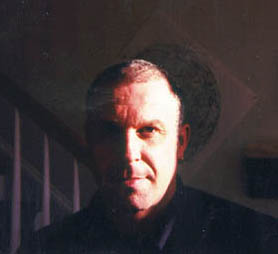
For those of the Black Community who have been incarcerated, Due Process was really a Dual Process; and Equal Protection was really Unequal. It is an old tale, as old as America, sadly; and one that seems to be unchanged now or in the future. Etheridge Knight spent eight years in Indiana State Prison. He chronicled his time there; and later, after his release in 1968, became an important part of the Black Arts Movement. Though many of his poems speak of redemption, many more also speak of hope lost; and of the mind-numbing passage of time, locked in a warren of oppressive authority.

Hard Rock Returns To Prison From The Hospital For The Criminal Insane


Hard Rock/ was/ "known not to take no shit
From nobody," and he had the scars to prove it:
Split purple lips, lumbed ears, welts above
His yellow eyes, and one long scar that cut
Across his temple and plowed through a thick
Canopy of kinky hair.

The WORD/ was/ that Hard Rock wasn't a mean nigger
Anymore, that the doctors had bored a hole in his head,
Cut out part of his brain, and shot electricity
Through the rest. When they brought Hard Rock back,
Handcuffed and chained, he was turned loose,
Like a freshly gelded stallion, to try his new status.
and we all waited and watched, like a herd of sheep,
To see if the WORD was true.

As we waited we wrapped ourselves in the cloak
Of his exploits: "Man, the last time, it took eight
Screws to put him in the Hole." "Yeah, remember when he
Smacked the captain with his dinner tray?" "he set
The record for time in the Hole-67 straight days!"
"Ol Hard Rock! man, that's one crazy nigger."
And then the jewel of a myth that Hard Rock had once bit
A screw on the thumb and poisoned him with syphilitic spit.

The testing came to see if Hard Rock was really tame.
A hillbilly called him a black son of a bitch
And didn't lose his teeth, a screw who knew Hard Rock
>From before shook him down and barked in his face
And Hard Rock did nothing. Just grinned and look silly.
His empty eyes like knot holes in a fence.

And even after we discovered that it took Hard Rock
Exactly 3 minutes to tell you his name,
we told ourselves that he had just wised up,
Was being cool; but we could not fool ourselves for long.
And we turned away, our eyes on the ground. Crushed.
He had been our Destroyer, the doer of things
We dreamed of doing but could not bring ourselves to do.
The fears of years like a biting whip,
Had cut deep bloody grooves
Across our backs.

-- Etheridge Knight

21 July 2010

Voices and Soul 20 July 2010 by Justice Putnam Black Kos, Tuesday's Chile Poetry Editor The Nigerian Poet, Playwright, Actor and Political Activist, Wole Soyinka, was awarded the Nobel Prize for Literature in 1986; the first African writer to be so recognized. Though much of his early work satirized the absurdities of his society with gentle humor and an affectionate spirit; as the struggle for independence in Nigeria turned sour, Soyinka's work took on a darker tone. One such example is a conversation between two adversaries who are often pitted against each other; two adversaries who, in the heat of battle, believe one to be the master of the other, yet each are one and the same; and so Soyinka offers us a discussion between a...
Civilian and Soldier


My apparition rose from the fall of lead, Declared, 'I am a civilian.' It only served To aggravate your fright. For how could I Have risen, a being of this world, in that hour Of impartial death! And I thought also: nor is Your quarrel of this world. You stood still For both eternities, and oh I heard the lesson Of your traning sessions, cautioning - Scorch earth behind you, do not leave A dubious neutral to the rear. Reiteration Of my civilian quandary, burrowing earth From the lead festival of your more eager friends Worked the worse on your confusion, and when You brought the gun to bear on me, and death Twitched me gently in the eye, your plight And all of you came clear to me. I hope some day Intent upon my trade of living, to be checked In stride by your apparition in a trench, Signalling, I am a soldier. No hesitation then But I shall shoot you clean and fair With meat and bread, a gourd of wine A bunch of breasts from either arm, and that Lone question - do you friend, even now, know What it is all about?


-- Wole Soyinka"Civilian and Soldier"

15 July 2010

On Oscar Grant, Martyrdom and The Digital Age


by

Justice Putnam


Two iconic images from my childhood have always haunted me, and I have seen them manifested from time to time over my five and half decades of walking this luminous sphere. Images so powerful that a Truth was hinted at by the many questions the images provoked.

There was no Twitter, YouTube or e-mail to transmit those images around the world, yet only days after the events, the world had seen them and was talking about them.

One is the self-immolation at a busy intersection in Saigon in 1963 of the Buddhist monk Thich Quang Duc:


I was eight years old when I saw that photograph in a magazine.

The other is the shooting, on another busy Saigon street in 1968, of the supposed Viet Cong Sympathizer, Nguyen Van Lem by the Police Chief of Saigon, Nguyen Ngoc Loan:


I turned thirteen years of age shortly after viewing the photo.

Thich Quang Duc's death was a protest against the war and Diem's treatment of the country's Buddhist monks, the photograph has a staged quality to it, Duc after all, had made his plans known. Nguyen Van Lem's death on the other hand, was a murder, a summary execution by a policeman. There was no trial, only an arrest and a gunshot to the head. The photograph is a frozen snippet in time, truly an accident it was taken at all.

Now flash forward to 3 November 2006. Malachi Ritscher, though no monk, hoped his death to be one of purpose. On his Web site, the 52-year-old experimental musician, who some family members said fought with depression, even posted his obituary.

As he stood on an off ramp in downtown Chicago at 6:30 in the morning; he saw his death as a call to the nation, as a potent symbol of his rage and discontent with the U.S. war in Iraq. He set up a video camera, doused himself with gasoline and set himself on fire.

"Here is the statement I want to make: if I am required to pay for your barbaric war, I choose not to live in your world. I refuse to finance the mass murder of innocent civilians, who did nothing to threaten our country... "


... he wrote in a suicide note found nearby...

"... If one death can atone for anything, in any small way, to say to the world: I apologize for what we have done to you, I am ashamed for the mayhem and turmoil caused by my country."

And so Malachi Ritscher martyred himself, so his voice would be heard.

But no one was listening.

In the early morning hours of 1 January 2009, Oscar Grant loosely fit the description of a young black man in America, a supposed sympathizer to the Thug Life and a threat to the community, the nation and the world, and so Oscar Grant was shot in the back by Police in those early morning hours, while laying face down on the Fruitvale BART station platform.

Outraged passengers recorded the scene on cell phones and digital cameras.


Those images circled the globe in mere seconds.

Malachi Ritscher did everything he could to draw attention to his martyrdom in this digital age, he consciously hoped to shock and outrage. His failure at that may be more because the Traditional Media could keep his suicide from the news cycle, and no independent images came from his demise. Few remember, know or care of Ritscher's death, or his protest.

Oscar Grant was murdered by long-held fear and animosity, murdered during a war on brown people domestic and abroad, by a policeman whose only defense is that he meant to torture Grant with 50,000 volts from a modern cattle prod instead. There was no trial for Oscar Grant, only an apprehension and a gunshot to the back.

Because those images of Oscar Grant's apprehension and murder were independently recorded and deftly transmitted as they happened, or in the seconds afterward, the Traditional Media and our own Justice system could not ignore them. One of the officers tried to confiscate cameras and phones, for the investigation she told people, but the train was packed and she couldn't confiscate them all. Six separate digital videos made it out. As shocking and outrageous as Grant's murder was to those who experienced it that early New Year's morning, their recordings and transmittals of his shooting also shocked and outraged a world.

Does anyone doubt for a moment, that a Prosecutor would have championed Oscar Grant's cause if those six videos had not rattled the consciences of people around this digital world? Though a conviction of sorts was secured in Oscar Grant's murder, Justice may not be wholly in the offing, but people are listening, and when people are listening, voices are heard, and when voices are heard, more voices are raised.

Change then might be immediate and whole, or sadly incremental, but it is always where change begins.


© 2010 by Justice Putnam
and Mechanisches-Strophe Verlagswesen


(cross posted at Daily Kos)
Voices and Soul


13 July 2010

by Justice Putnam
Black Kos Tuesday's Chile, Poetry Editor


When all seems hopeless, when the hyena cackle of defeat is biting at pant cuffs and frayed nerves; when the crushing weight of today is laying low; when the heat stroke of burned out ambitions are sweating inside an oppressive solitary cage, a cage that is bolted in a boxcar rattling along this penal colony rail road earth; it is important to remember...


destiny

under volcanoes & timeless years within watch
and low tones. Around corners, in deep caves among
misunderstood and sometimes meaningless sounds.
Cut beggars, outlaw pimps & whores. Resurrect work.
Check your distance blue. Come earthrise men
deepblack and ready, come sunbaked women rootculture on the move.
Just do what you're supposed to do, what you say you gonta do
not the impossible, not the unimaginative,
not copy clothed as original and surely
not bitter songs in european melodies. Take hold
do the necessary, the possible, the correctly simple
talk of mission & interpret destiny
put land and selfhood on the minds of our people
do the expected, do what all people do
reverse destruction. Capture tomorrows

-- Haki Madhubuti


(Merced River, El Portal, California / copyright Justice Putnam)

30 June 2010

Voices and Soul


29 June 2010


by Justice Putnam
Black Kos, Tuesday's Chile, Poetry Editor


Much has been written about Gwendolyn Brooks' poem, The Ballad of Rudolph Reed. It has been speculated that Brooks was condemning the reaction Reed took to the injury of his daughter by racists in his new neighborhood; that he was at fault for moving into a white enclave he should have been wise enough to avoid. Others have speculated that she was advocating his reaction and that he was justified in spite of the tragedies that followed.

Still others state that she was simply recording the facts.

I say it is none of these. I say that Brooks is showing that all reactions don't arise out of a vacuum; that for every action, there is indeed, a reaction. Whether the actions and/ or reactions are justified, is up for the reader to conclude.

What is certain is that a man and woman have a breaking point, no matter how oaken they may be; that a man and woman can only be pushed so far.

What is certain is that tragedy upon tragedy has been perpetuated on the Black in America; and any reaction, whether rioting in the streets or taking vengeance on the perpetuators of hate, arises not out of one instance that set the world ablaze; but many instances. What is certain is that few will remember or care what caused the reaction, save for those who reacted; and no bandage after the fact will lessen the pain of the tragedies that occurred; and are bound to occur later.


The Ballad of Rudolph Reed


Rudolph Reed was oaken.
His wife was oaken too.
And his two good girls and his good little man
Oakened as they grew.

"I am not hungry for berries.
I am not hungry for bread.
But hungry hungry for a house
Where at night a man in bed

"May never hear the plaster
Stir as if in pain.
May never hear the roaches
Falling like fat rain.

"Where never wife and children need
Go blinking through the gloom.
Where every room of many rooms
Will be full of room.

"Oh my home may have its east or west
Or north or south behind it.
All I know is I shall know it,
And fight for it when I find it."

The agent's steep and steady stare
Corroded to a grin.
Why you black old, tough old hell of a man,
Move your family in!

Nary a grin grinned Rudolph Reed,
Nary a curse cursed he,
But moved in his House. With his dark little wife,
And his dark little children three.

A neighbor would look, with a yawning eye
That squeezed into a slit.
But the Rudolph Reeds and children three
Were too joyous to notice it.

For were they not firm in a home of their own
With windows everywhere
And a beautiful banistered stair
And a front yard for flowers and a back for grass?

The first night, a rock, big as two fists.
The second, a rock big as three.
But nary a curse cursed Rudolph Reed.
(Though oaken as man could be.)

The third night, a silvery ring of glass.
Patience arched to endure,
But he looked, and lo! small Mabel's blood
Was staining her gaze so pure.

Then up did rise our Rudolph Reed
And pressed the hand of his wife,
And went to the door with a thirty-four
And a beastly butcher knife.

He ran like a mad thing into the night
And the words in his mouth were stinking.
By the time he had hurt his first white man
He was no longer thinking.

By the time he had hurt his fourth white man
Rudolph Reed was dead.
His neighbors gathered and kicked his corpse.
"Nigger--" his neighbors said.

Small Mabel whimpered all night long,
For calling herself the cause.
Her oak-eyed mother did no thing
But change the bloody gauze.


-- Gwendolyn Brooks